



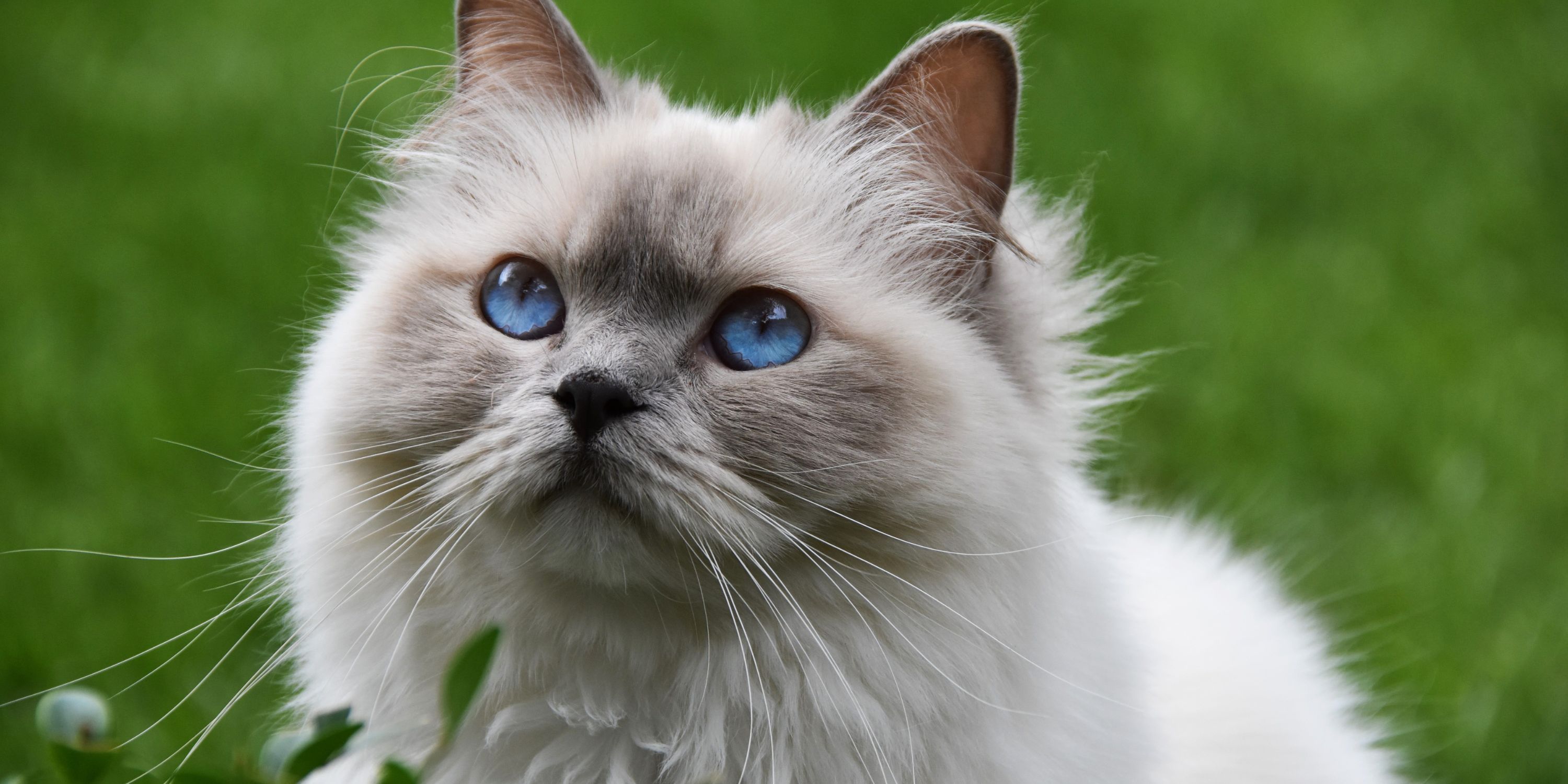
Let’s be honest: we’ve all considered trimming our cat’s whiskers at one point or another. But what happens if you cut a cat’s whiskers?
Whiskers function as a GPS or radar system for cats, allowing them to maneuver safely in their surroundings. The super-responsive proprioceptors in whiskers enable cats to make death-defying jumps with smooth landings, making you reconsider whether Newton’s Law of Gravity even exists. Cutting whiskers off a cat will impede their sense of position and may put them at risk of injuring itself.
So, is there a safe way of trimming your cat’s whiskers? And when is it okay to take matters into your own hands and give your cat the trimming it deserves? You’ll find out all of that and more in this article.
What Happens If Cat Whiskers are Cut Off?
While whiskers may appear just like regular stiff hair, they carry special sensory receptors (or proprioceptors) that connect directly to the nervous system. The neural network created by these receptors enables cats to sense objects and navigate their environment.
Besides their nose and eyelids, cats also have whiskers on their chin, jawline, and on either side of their legs for a 360-degree sensory perception. These receptors are so fine-tuned that they can even help cats sense when someone passes by through the change in the air current.
Many have termed whiskers an innate environmental scanning system that acquires valuable information about the cat’s surroundings. They can easily distinguish the size of objects and the space between them, making them remarkably agile in the dark as well.
Risks of Cutting a Cat’s Whiskers
Here are three possible risks of cutting a cat’s whiskers:
Loss of senses
Cutting whiskers off a cat devoids it of a lot of sensory perception. Imagine lopping off the pointers of your fingers – you might be able to sense different objects, but you’ll lose part of your sensory perception.
Lack of equilibrium and disorientation
Since whiskers work as a compass in the dark, they keep a cat aware of its surroundings. Once their whiskers are chopped off, cats may find it difficult to navigate their environment.
Difficulty in movement and navigation
Imagine driving blind in an unfamiliar place without your GPS. That’s how cats feel without whiskers. With no extra sensory input from their surroundings, some cats even hesitate to move around.
Vulnerability against predators
Since cats are nearsighted, they depend more on whiskers to maneuver through objects. Without such sensory receptors, they are more likely to injure themselves through collision while also being at risk of predation.
Should You Trim Your Cat’s Whiskers?
No, you shouldn’t trim a cat’s whiskers. Chopping off your cat’s whiskers may make it look cuter, but this will hinder its ability to navigate the environment.
Does that mean you shouldn’t groom your cat’s whiskers at all? It’s probably a good idea to just let your cat’s whiskers be. These whiskers shed naturally like other hair on your cat’s body and naturally regrow as well. They do not require any special care and accidentally tugging them can be quite painful for your feline friend.
Importance of Whiskers in Cats
What appears as ordinary facial hair exhibits a far more intricate biology. The sensory receptors combined with a vast neural network efficiently transmit information to the nervous system for quick response. Whiskers enable cats to gauge the external ecosystem, including nearby objects’ size, shape, and distance.
Radar Sensors
What took humans centuries of scientific experiments to develop, cats possess innately. It’s interesting to note that humans modeled a lot of their robot sensors after cat whiskers. Cat whiskers carry powerful proprioceptors that vibrate in response to the change in airflow, implying a moving object nearby. The receptors can even conclude their location, size, and speed of motion. The information enables cats to identify “fight or flight” situations when it comes to their safety.
Communication Channel with Fellow Cats
Whiskers possess a complex neuro-receptor system capable of communicating with humans and fellow cats. Cats can use whiskers to offer insight into their emotions. For instance, if the whiskers are fanned out and pointing forward, it may imply imminent danger. Whereas content and happy cats usually have their whiskers in a relaxed position.
Assists in Hunting
Like most predators, cats are inherently discrete in their movement. But the sensory data from whiskers makes them even more formidable as predators. When cats are on a hunting pursuit, their whiskers stiffen up and point forward to detect the location of the prey. The proprioceptors enable cats to detect the movement of their prey which helps in the hunting process.
Protection
The superciliary whiskers above a cat’s eyebrows protect its eyes by initiating a blinking reflex. This means that at any time if a fellow hostile cat or any predator pokes at the cat’s eyes, its superciliary whiskers protect them from damage by making the cat blink involuntarily.
Will Cat’s Whiskers Grow Back When Trimmed?
Fortunately, like normal hair, trimmed cat whiskers will grow back in time as long as the hair follicle is intact with its nerve ending. So, your cat’s whiskers should grow back normally unless you have completely uprooted them. It’s very unlikely that someone may completely uproot a cat’s whiskers since tugging at them causes immense pain to our feline friends.
With that said, it may take several weeks before your cat’s whiskers grow to a safe length after a trim. It’s also quite interesting that white cats may grow their whiskers back in a black color after trimming them. This change in color, however, does not affect the whiskers’ effectiveness. In most cases, it takes cats anywhere from 1 to 3 months to grow their whiskers back to a usable length. During this time, it’s best to keep your cat indoors so it doesn’t hurt itself.
And lastly, if your cat’s whiskers are damaged from the root, they may not grow back. If you suspect this may be the case, it’s best to contact a veterinarian for a professional consultation.
Cutting a cat’s whiskers can cause discomfort and disorientation for the cat, as their whiskers are an important part of its sensory system. Cats use whiskers to sense their surroundings and rely on them for navigation and balance. Cutting a cat’s whiskers can disrupt their ability to move around and hunt. It is not recommended to cut a cat’s whiskers.